


 © 2026 Tristram Kenton
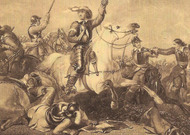
I puritani, with a libretto by Count Carlo Pepoli, was Vincenzo Bellini’s final opera, as he died just eight months after its premiere in January 1835. Based on Têtes Rondes et Cavaliers, an historical play by Jacques-François Ancelot and Joseph Xavier Saintine, it is set during the English Civil War, although the specific episode described is fictitious. In fact, the narrative was always intended to be a commentary on the political climate of 1830s Paris following the July Revolution, rather than on Britain in the 1640s.
Set on a fortress near Plymouth, it sees the Puritan soldiers anticipate a victory over the Royalists. However, the Puritan leader Sir Riccardo Forth is disconsolate because he loves Elvira, daughter of Lord Gualtiero Valton. She is about to marry the Royalist Lord Arturo Talbo, with Elvira’s uncle Sir Giorgio Valton having persuaded her father to permit the union.
Gualtiero says he will not be able to attend the wedding ceremony, as he needs to escort a mysterious woman to London to appear before Parliament. A curious Arturo discovers that she is Enrichetta (Henrietta Maria), widow of the executed King Charles I, and, after Elvira places her wedding veil over the woman’s head, he realises he can use the disguise to help her escape. As he and Enrichetta attempt to slip out, they are challenged by Riccardo who believes the woman to be Elvira. When he realises she is not he allows them to leave, because this will not only separate Arturo from Elvira but make him guilty of treason.
Elvira, pained by her loss, descends into madness, which distresses both Giorgio and Riccardo. Giorgio knows the only thing that will restore her happiness is the return of Arturo, who is now a fugitive condemned to death by Parliament. While Riccardo is initially reluctant to save his rival, he eventually agrees to do so, though with the caveat that he will kill him if he actually meets him the following day on the battlefield.
Arturo and Elvira manage to find each other once more, and, after Elvira discovers Arturo did not marry the woman he had escorted, they reaffirm their love for each other. Soldiers enter announcing Arturo’s death sentence, but then a herald brings letters. These proclaim that, although the Royalists have been defeated, Oliver Cromwell has pardoned all prisoners, leading to rejoicing all round.
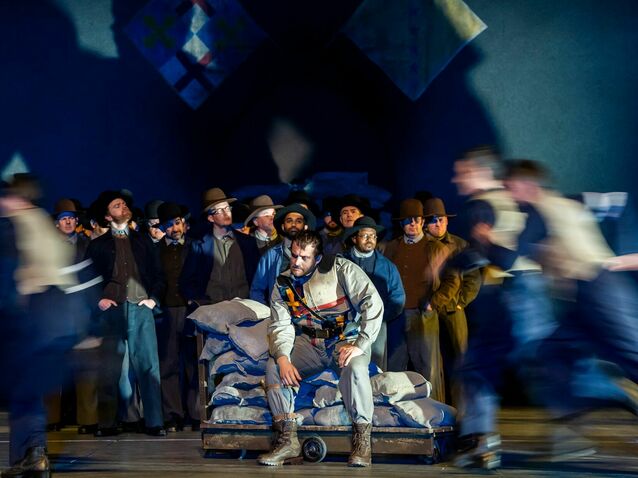
Andrzej Filończyk as Sir Riccardo Forth in Richard Jones's I puritani, The Royal Opera ©2026 Tristram Kenton
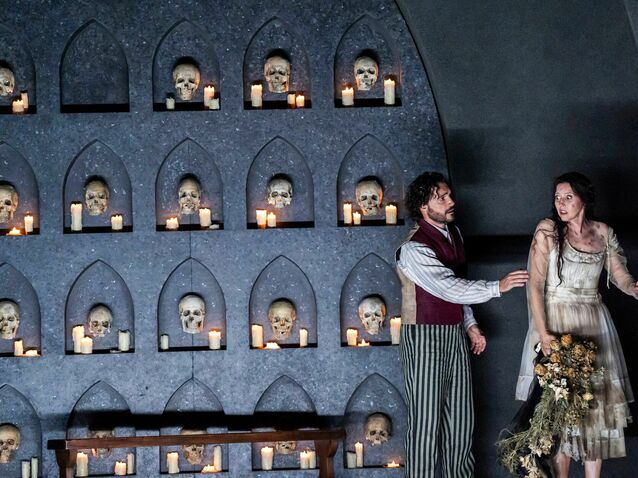
Richard Jones’s new production, which represents the first time that the work has been seen at the Royal Opera House since 1991, deliberately mixes eras. Hyemi Shin’s set reveals pointed Gothic arches, with the fortress having already stood for several centuries by the time of the Civil War. Nicky Gillibrand’s costumes, however, range from the seventeenth to the twentieth centuries, and also seem to cross countries and cultures. Cannons share the stage with searchlights, while the pink boxes holding Elvira’s wedding clothes look decidedly modern.
Such an approach can be useful on occasions to show, for example, how certain characters are enlightened by making them appear more ‘modern’ than others. Its advantages seem more limited, however, in a piece that many people will be watching for the first time, when it is more likely to confuse than inform. Mixing eras can be effective for well known works when the themes are so universal that they become more important than the setting. By the same token, when the seventeenth century so clearly provides the backdrop to I puritani, it makes little sense to set ‘half’ of it in that time and ‘half’ at later dates.
The amount of movement on stage varies across the evening, and, while it is often appropriate for the occasion, there are times when it is less so. When the chorus of soldiers sings ‘Quando la tromba squilla’ in Act I, it seems a shame to keep them so still while the real activity is carried out by some actors who construct a cannon. There are other occasions when already widespread activity feels undermined by these actors quite literally running around, with their contribution feeling too aimless to keep everything visually balanced. This said, there are many moments that hit the mark as Adam Silverman’s lighting designs ensure various parts of the set are cast in deep shadow at different times. They also create a ‘sparkling’ effect as they reflect on the soldiers’ helmets, with the result that, no matter how flawed one might deem the staging to be, it is not unenjoyable.
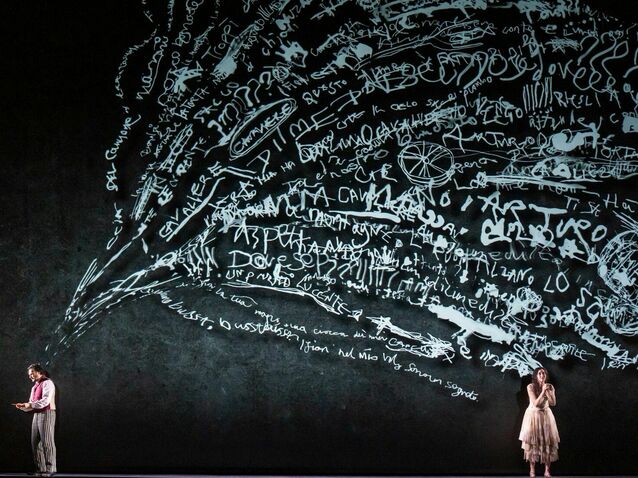
Francesco Demuro (Lord Arturo Talbo) and Lisette Oropesa (Elvira) in I puritani, The Royal Opera ©2026 Tristram Kenton
The singing is first rate, with Lisette Oropesa giving an outstanding performance as Elvira. Although, unlike Lucia di Lammermoor, her descent into madness does not see her kill anyone, it lasts for far longer in terms of stage time, meaning the believability of her act has to be sustained. Oropesa rises to the challenge superbly, with her soprano being possessed of a great clarity that paradoxically enables her to offer a ‘dreamy’ sound that conveys her state of mind and total fragility. Her mad scene in Act II, which includes ‘Vien, diletto, è in ciel la luna’, reveals one particular triumph for the staging as, with her being framed by an arch that Giorgio and Riccardo support visually by gripping on either side, we could almost be gazing at a religious triptych. When she sings ‘the moon is high’ she is suddenly illuminated by a large, silvery one that removes everything else from our sight.
As Arturo, Francesco Demuro reveals an extremely expansive tenor that yields some quite thrilling results, and he even tackles the high F in Act III’s ‘Credeasi, misera’. Ildebrando D'Arcangelo as Giorgio reveals a strong and powerful bass-baritone that is nonetheless nuanced and capable of great sensitivity, while Andrzej Filończyk offers an immensely persuasive and engaging baritone as Riccardo. There is excellent support from Blaise Malaba as Gualtiero, Marcela Rahal as Enrichetta and Giorgi Guliashvili as Sir Bruno Roberton, while in the pit Riccardo Frizza elicits a precise, insightful and often very beautiful sound from the Orchestra of the Royal Opera House. If there are some misgivings about the staging, these are far outweighed by the evening’s superb musical credentials, making the opportunity to experience this relative rarity one that should be seized.
By Sam Smith
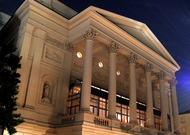
I puritani | 30 June - 19 July 2026 | Royal Ballet and Opera, Covent Garden
the 03 of July, 2026 | Print



Comments